
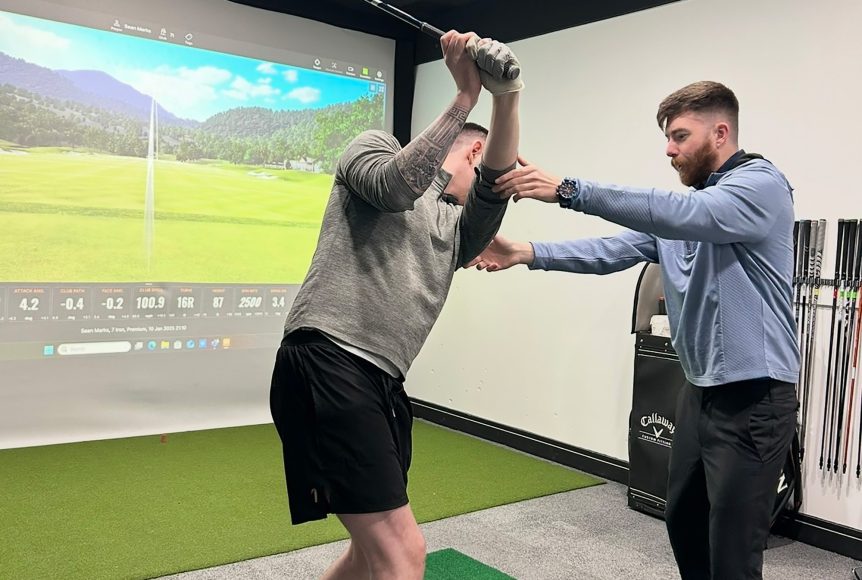
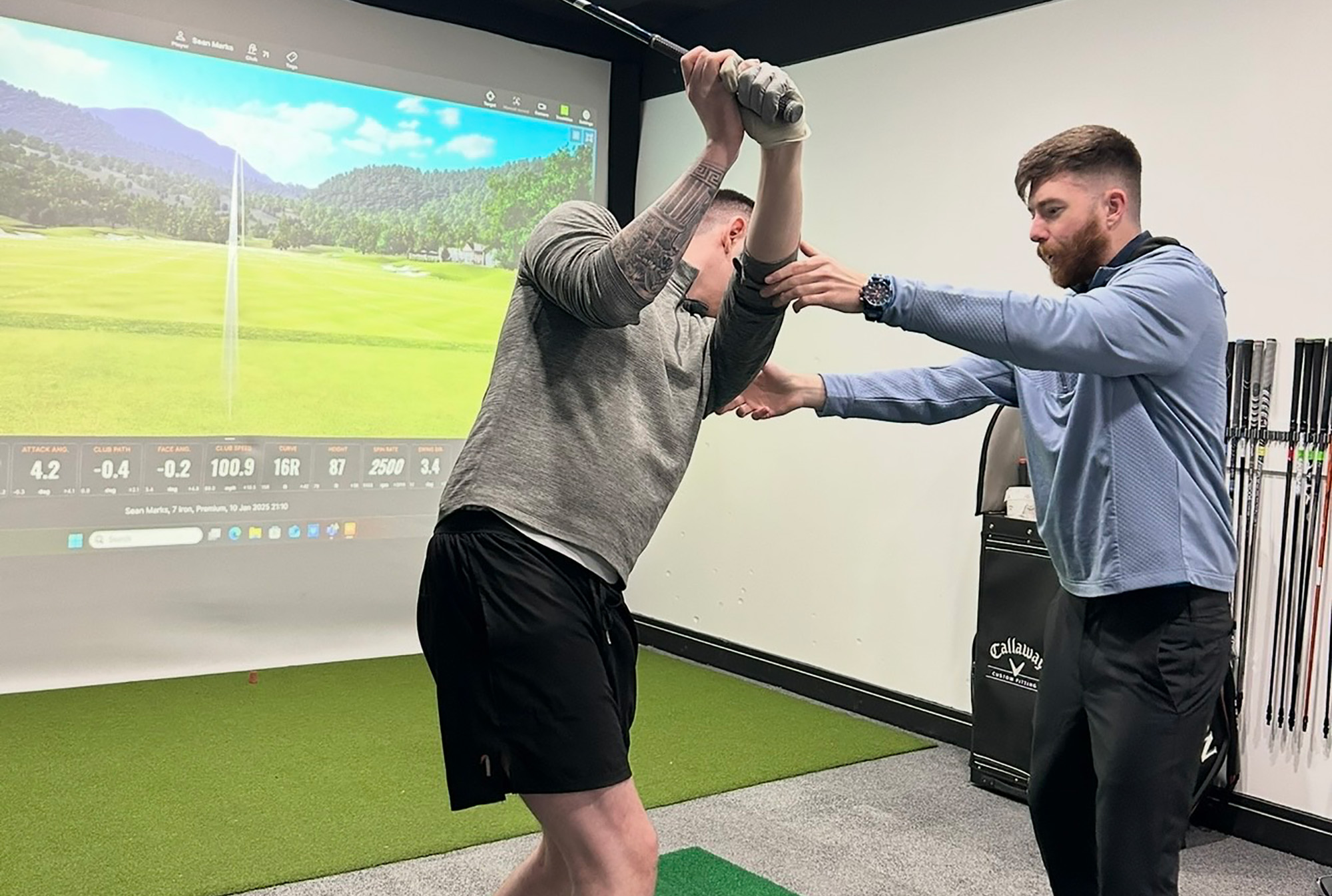
One Saturday morning a number of years ago at a club I previously served my time at as an assistant, a member walked in through the pro-shop doors with the latest edition of a popular golf publication magazine under their arm. They approached the pro-shop counter and plopped the magazine down on it beside me. They proceeded to eagerly grab one of our clubs from the second-hand discount bag and took a wild swish to the top of their backswing (narrowly avoiding smashing a nice hole into the ceiling I might add). The member erupted enthusiastically:
“Sean! Am I getting into the same backswing as yer man there on the front of that magazine?!”
“Well…..are you sure you want to be?”
(He looked on confused to my question, but with a look that all but said that I had definitely spiked his interest in where this unusual answer of mine might be leading)
“Well, what I mean is, that’s not necessarily going to help your game by trying to look like that. What does your bad shot look like at the moment?”
The member looked at me with such a glare of shock that you’d swear I had asked him if he would mind hoovering the shop floor at the end of my shift for me.
He scoffed, “Jaysus, I think the world number 1 has a fair idea what he’s doing. Sure, what does it matter what my ball is doing on my bad shot? I just want to know if I’m swinging like he is. He’s the best player on the planet, what do you mean trying to swing like him might not help me?
It was at this moment that our conversation had met a junction, and I was determined to help guide the technique curious member, towards adopting a new perspective and understanding which would totally redefine how he viewed the entire improvement process pertaining to golf, as the scope it would subsequently have on his future handicap and scores would be immense to put it mildly
So, I elaborated further to the gent:
“You do certain things in your swing because you (at least currently) have to do those certain things. You will make a particular move because it is a reaction to several other things that have preceded this motion elsewhere in your swing or in your set-up position, and if you didn’t move in that particular way and introduce what may sometimes be less then aesthetically pleasing compensations, you would hit the ball infinitely worse.
Yes, you read that correctly, I was essentially telling the guy that despite your swing becoming seemingly easier on the eye and even at a point in time allowing comparisons to be drawn between himself and a world class player on the cover of a golf magazine, it could have absolutely resulted in the amateur golfer who was an okay-ish club player, into suddenly hitting the ball like a grade A hacker.
The best players in the world that you watch competing for the sport’s highest honours have developed a particular swing pattern for a very deliberate purpose. To allow them to get the ball into the hole in the fewest shots possible, quite frankly. The goal of any swing change they’ve made to get to the level they’ve reached, has been to make their swing more functional. A top player is able to put vanity aside and disregard how a swing change may look, as long as it is achieving the resulting ball flight they are desiring….queue a metaphorical walk onto the stage from Moe Norman, Eamon Darcy, Mathew Wolff, Jim Furyk, Bubba Watson or any other plethora of outstanding ball strikers throughout history that have swings that an uneducated set of eyes wouldn’t class as particularly attractive looking swings.
Changing one thing on its own in isolation solely for the sake of your swing looking more “textbook” or like a particular player on Tour is a dangerous game (as per exactly what this golfer was attempting to do with his magazine before a fortunate intervention took place inside the four walls of his local ProShop to steer him in the right direction as to how to actually play better golf).
Whenever you’re making a swing change, it is critical that you get to the root cause of why you are looking to change something that may be perceived as a fault and not just what on a surface level appears to be the quick fix answer. What an un-trained eye may perceive as a strange looking issue, may actually be the only bit of glue holding together your swing at the level it’s currently able to perform to on its best days.
The solution is always a golf coach who will diligently identify the real root cause of your problems and present you with a simple concept, speaking to you about a max of one or two things in your swing.
To accurately diagnose and truly get to the heart of a technical deficiency, the process in which most high-level coaches will likely go through to help in their analysis, will consist of a series of probing questions to the client, so they as the coach ensure that they are armed with a full detailed picture of exactly what the optimal route to proceed with is from an instructional point of view, to enable them in attaining the best results for their player.
In the coaches mind at this point, they are playing a game of chess with your swing’s biomechanics. Analysing your ball flight as they observe you hit shots to get a sufficient database to work with, whilst taking into consideration the golfer’s current physical capabilities, the students current swing thoughts and concepts that the client currently holds a belief in, which will directly influence how they are moving their club and body. The in-vogue term in coaching circles these days will describe this process as coordinating certain “match ups” in a player’s swing.
By the time a high quality coach advises you of any changes to make, they have already calculated how changing these one or two things that they are verbalising to you, will effect perhaps five or potentially even more other things that they won’t dare mention to you at this early stage, in an effort to simplify the learning process for you as the student and avoid any unnecessary confusion on the subject area. The alternative would and does on a daily basis worldwide, lead to information overload and ultimately paralysis by over analysis for the player, despite being given high quality instructions to apply. A good coach will use all they know; but will say relatively little. They won’t try to overwhelm you by sounding like someone who has studied the golf swing their entire life, although they quite likely will have done so. They will issue instruction in an easy-to-understand manner that does not leave you wondering what on earth all of that technical jargon means and how it may be relevant to your game.
So, if you’re ready to take action and would like to receive instruction tailored specifically to your swings needs as an individual and avoid the mass confusion from the amount of “tips” that are out there and so readily available everywhere you look these days, you can contact me via email at seanmarksgolf@gmail.com and I will take things from there to help you reach your golfing goals, regardless of whatever level you aspire to play to.
Are you thinking seriously about improving your game? Do you wish to receive as close to instant feedback on your practice sessions as possible to accelerate your development process? Contact Seán.
In-Person coaching is provided at The SMG Studio (Kilcock), The Halpenny Golf Driving Range (beside Dublin airport) and Online Coaching via Skillest as per links below:
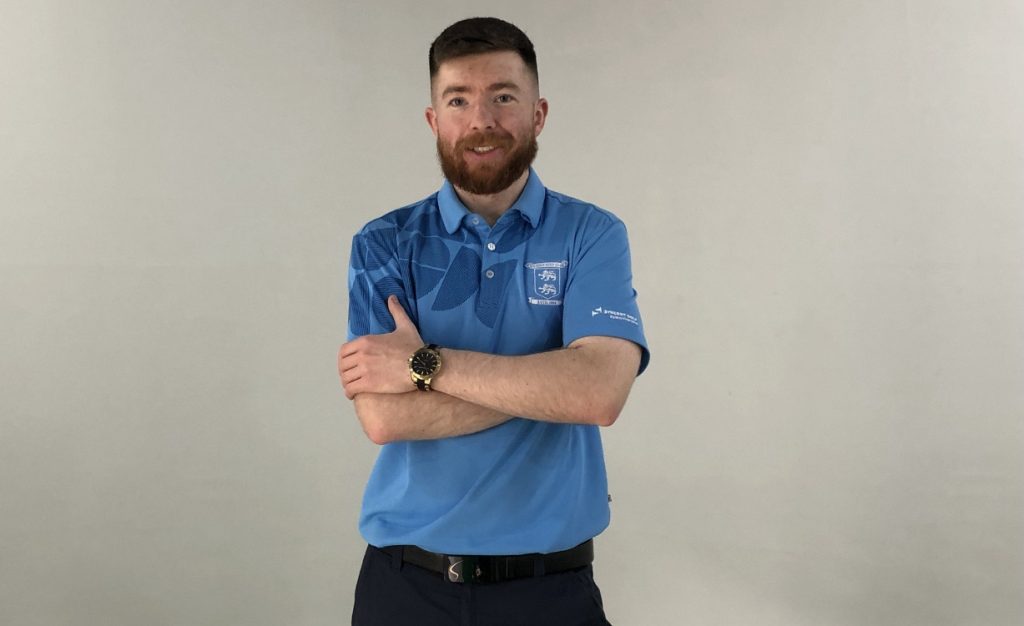
Seán Marks PGA Professional
 |  |  |  |  |  |